
The American Academy of Pediatrics’ Council on School Health issued a policy statement in which they expressed the “academic, social and physical benefits for children of all ages”, of attending recess. The LA Times wrote an article about it here. As they write, “Even as increased pressure to raise standardized test scores has pushed schools to consider cutting recess, the personal time for kids shouldn’t be curbed to make more time for classroom study, they added, noting that, “Ironically, minimizing or eliminating recess may be counterproductive to academic achievement.”
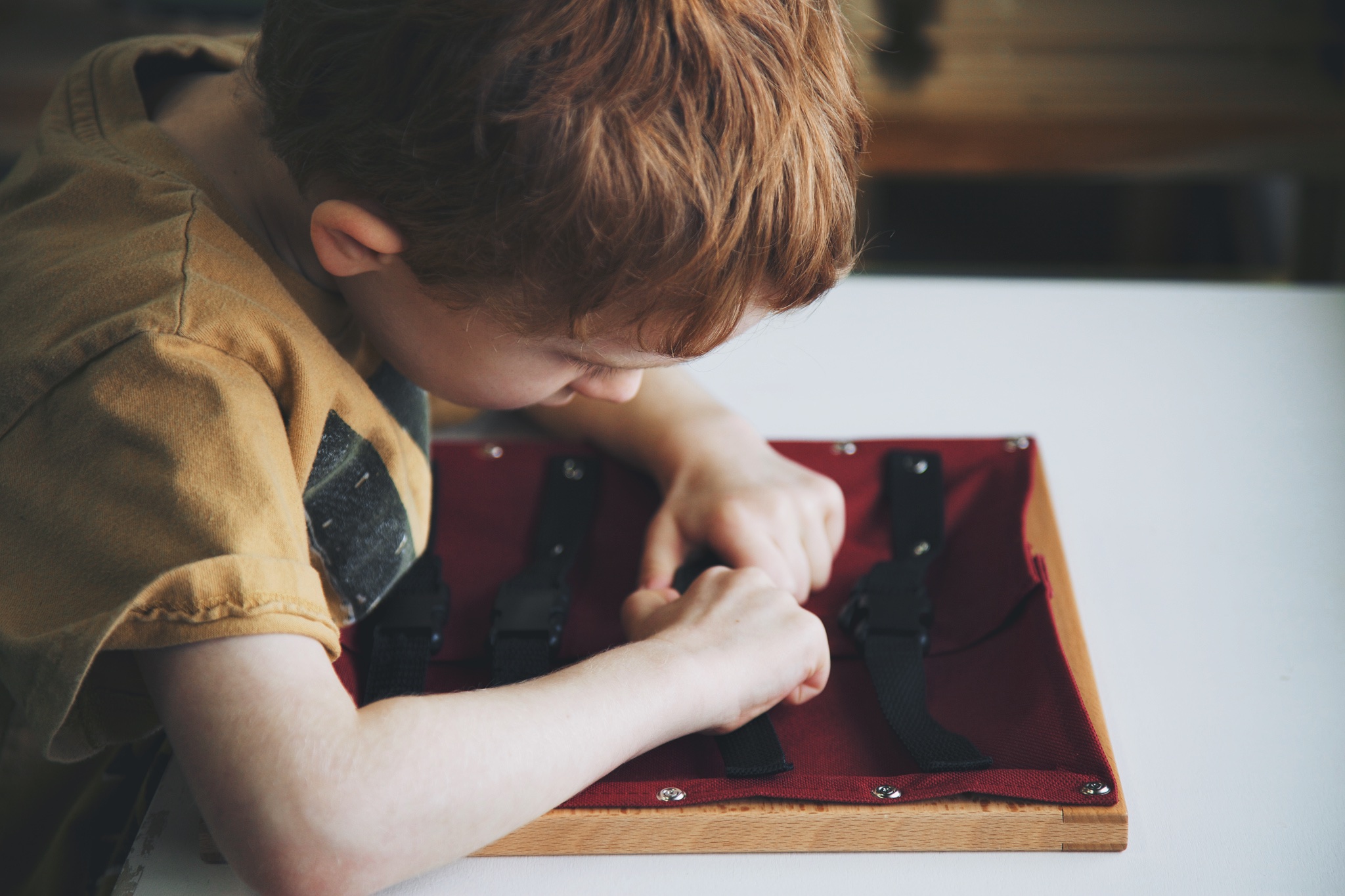
We thought we would take this opportunity to jump into the conversation. One of the major departures from traditional education that Montessori enacts, is recognizing that movement, all forms of movement, are tied with thought. Which is to say, not only is recess important, so is actual, physical movement within the classroom itself.
Thinking in terms of architecture once more, picture a conventional, traditional classroom. What do you envision? Typically, there’s a row of desks, with students carefully seated in their assigned positions. Now, close your eyes and visualize the Montessori classroom? Children are not confined to one location. They are free to move about, following their own interests.
Also, it’s extremely important to note that many of the Montessori materials, especially the sensorial activities, are specifically designed to encourage movement. Take, for instance, the red rods, as pictured above. There are ten units to the activity. Each time a student selects one rod from the shelf, she walks them to her floor mat, positioned somewhere in the room, at a place of her choosing. Basically, this activity alone will require 20 trips around and through the class. Imagine how many interactions and opportunities, not only for movement, but also for so much else, that transpire.
There are also important philosophical points to take into consideration. Shedding her Cartesian heritage, Montessori takes the “full range of the body’s capabilities” into consideration. What this means, is that instead of divorcing education from the body, and only concentrating on the mind (students seated in rows), Montessori puts the body back into education.
“The child absorbs the (environment) not with his mind but with his life itself,” says Montessori. (Montessori 1949: 23) Movement is, at last, tied to learning. “It is essential for our new education that mental development be connected with movement and dependent upon it.” (Montessori 1991: 52) There is a movement afoot to be sure! Its name is Montessori.

Baan Dek
An incredible Montessori foundation for children and an inspirational resource for teachers and parents.